Gemological Learning Center
The Gemological Learning Center provides educational resources designed to help individuals understand the science and principles behind gemstones and diamonds. Gemology combines scientific analysis with careful observation to identify and evaluate gemstones accurately.
Through these educational topics, visitors can learn how diamonds are graded, how gemstones are identified, and what factors influence their value. Our goal is to provide clear, reliable information that improves transparency and knowledge within the jewelry industry.
Whether you are a jewelry professional, collector, student, or enthusiast, these resources offer valuable insights into the fascinating world of gemology.
Educational Topics
Our educational topics cover essential concepts used by gemologists and jewelry professionals worldwide.

Diamond Grading Basics
Learn the fundamental principles used to evaluate diamond quality. This includes understanding the internationally recognized grading criteria that determine the beauty and value of a diamond.

Understanding Diamond Clarity
Diamond clarity refers to the presence of internal inclusions and external blemishes. This section explains how clarity is evaluated and how it affects the overall appearance and value of a diamond.

Diamond Color & Fluorescence
Discover how diamond color is graded and how subtle differences in color can impact a diamond’s quality and value. Learn how fluorescence affects the appearance of diamonds under ultraviolet light
Gemstone Identification Techniques
Explore the scientific techniques used by gemologists to identify natural gemstones and distinguish them from synthetic or treated stones.

Natural vs Lab-Grown Diamonds
Learn to distinguish natural from lab-grown diamonds by understanding their unique formation processes and key identifying traits.

Factors That Influence Diamond Value
Several factors contribute to a diamond’s market value. This section explains how grading, rarity, craftsmanship, and certification influence pricing.
Diamond 4Cs Section
Understanding the 4Cs of Diamonds
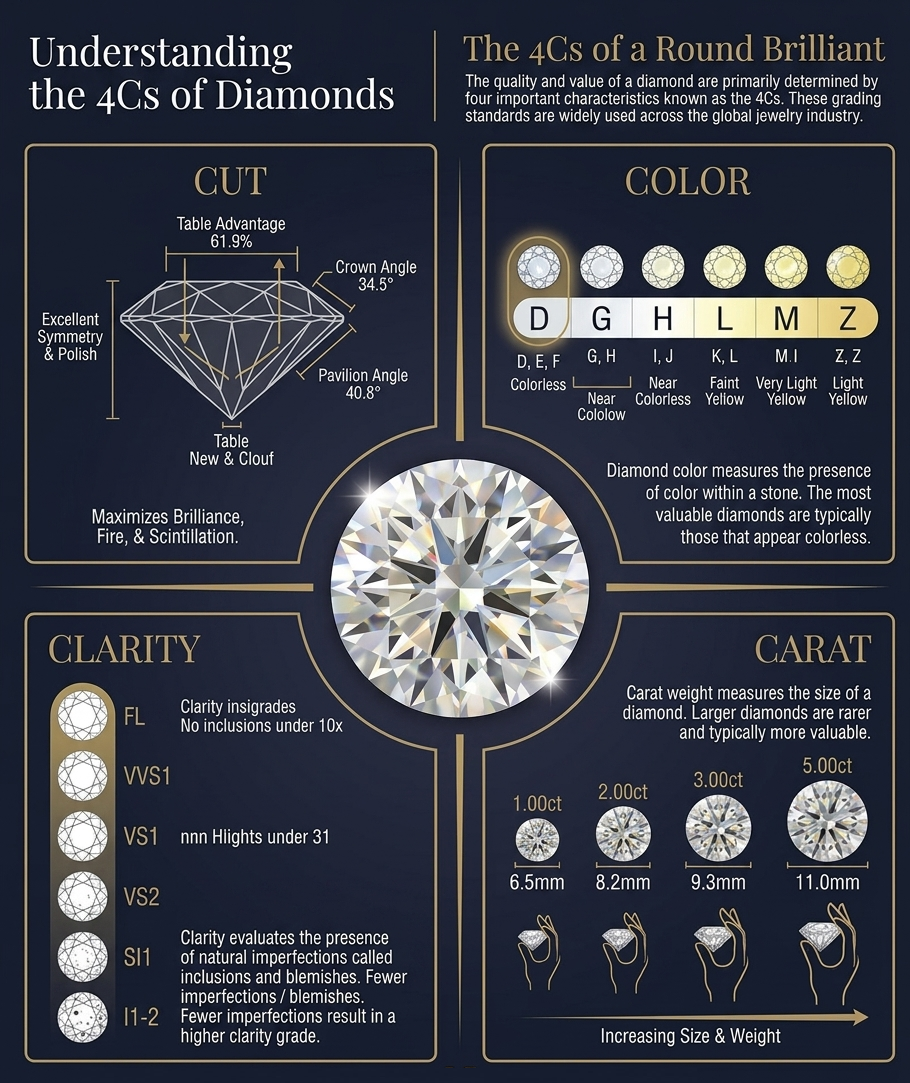
The quality and value of a diamond are primarily determined by four important characteristics known as the 4Cs. These grading standards are widely used across the global jewelry industry.
Cut
The cut refers to how well a diamond has been shaped and faceted. A well-cut diamond reflects light beautifully, creating brilliance and sparkle.
Color
Diamond color measures the presence of color within a stone. The most valuable diamonds are typically those that appear colorless.
Clarity
Clarity evaluates the presence of natural imperfections called inclusions and blemishes. Fewer imperfections generally result in a higher clarity grade.
Carat Weight
Carat weight measures the size of a diamond. Larger diamonds are rarer and typically more valuable.
Understanding these four characteristics helps buyers make informed decisions when selecting a diamond.
Gemstone Identification Tools
Tools Used in Gemstone Identification
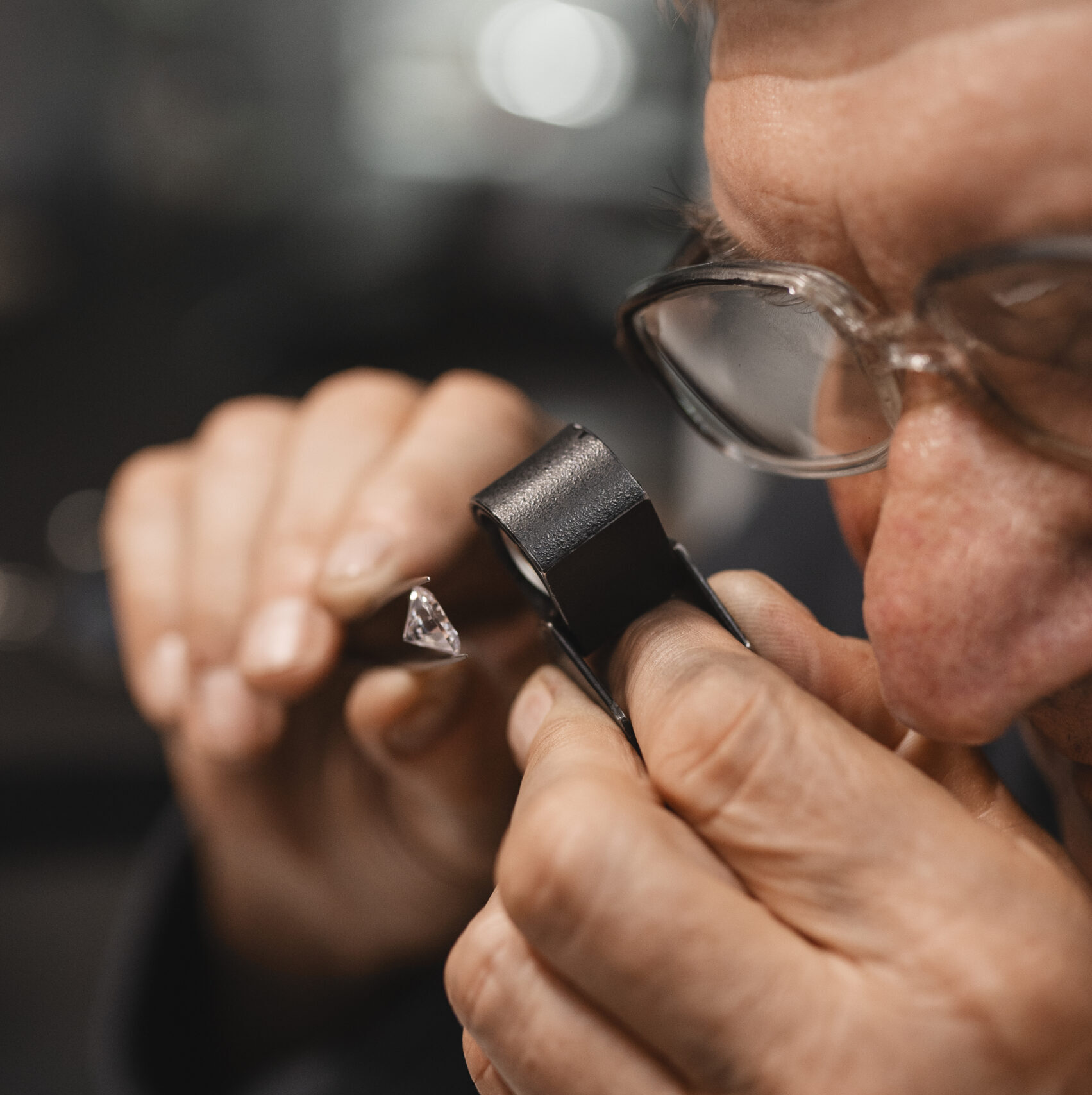
Professional gemologists use specialized tools to analyze and identify gemstones accurately
Jeweler’s Loupe (10x Magnification)
A small magnifying tool used to examine gemstone inclusions and surface characteristics.
Gemological Microscope
Provides higher magnification to observe internal structures and unique gemstone features.
Refractometer
Measures how light bends within a gemstone, helping identify its refractive index.
Spectroscope
Used to analyze how gemstones absorb light, which helps determine their composition.
Ultraviolet (UV) Lamp
Used to detect fluorescence, which can reveal important gemstone properties.
These tools help experts distinguish between natural, treated, and synthetic gemstones.
Gemological Charts and Visual Guides
Educational Diagrams & Charts
Visual guides play an important role in understanding gemstone grading and identification. Our educational charts illustrate important gemological concepts, including:
• Diamond clarity grading diagrams
• Diamond cut proportions
• Gemstone hardness scale (Mohs scale)
• Gemstone comparison charts
• Diamond facet structures
These diagrams help both beginners and professionals better understand the structural and optical properties of gemstones.
Gemological Integrity of Texas | Diamond Grading Laboratory
Independent diamond grading laboratory providing professional diamond evaluation and certification reports.